
The Canadian Oncology Sexual Health Initiative (“COSHI,” “we,” “us,” or “our”) is committed to protecting the privacy of all individuals who visit our website at coshi.ca (the “Website”). This Privacy Policy explains how we collect, use, disclose, and safeguard your personal information in accordance with the Personal Information Protection and Electronic Documents Act (PIPEDA) and Quebec’s Act Respecting the Protection of Personal Information in the Private Sector (Quebec Law 25), as applicable.
By using our Website, you consent to the practices described in this Privacy Policy. If you do not agree with this policy, please do not use our Website.
We collect the following types of information:
When you use our contact form, we collect the following personal information:
We do not require you to create an account, and we do not collect financial or payment information.
When you visit our Website, we may automatically collect certain technical information through analytics tools and cookies, including:
This information is collected to help us understand how visitors use our Website so we can improve the user experience and the relevance of our resources.
Our Website uses cookies and similar technologies. Cookies are small text files stored on your device that help our Website function properly and provide us with usage data.
These cookies are necessary for the Website to function and cannot be disabled. They include cookies required by our content management system (WordPress) to maintain your session and preferences.
We use analytics tools to collect aggregated, anonymized data about how visitors interact with our Website. This helps us understand which resources are most useful and where we can improve. Analytics cookies may track pages visited, session duration, and traffic sources.
Our Website may load fonts and other resources from third-party services. We host Google Fonts locally on our servers to minimize third-party data sharing. Some pages link to external websites, including YouTube, which may set their own cookies when you visit those sites. We are not responsible for the cookie practices of external websites.
Managing Cookies
You can manage or disable cookies through your browser settings. Please note that disabling essential cookies may affect the functionality of the Website. For more information about managing cookies, visit your browser’s help documentation.
We use the information we collect for the following purposes:
We do not use your personal information for marketing purposes, and we do not send unsolicited communications.
We do not sell, rent, or trade your personal information to third parties. We may share your information in the following limited circumstances:
We retain personal information collected through the contact form only for as long as necessary to respond to your inquiry and for a reasonable period thereafter for record-keeping purposes. Analytics data is retained in anonymized, aggregated form and does not identify individual users.
We implement reasonable technical and organizational measures to protect your personal information against unauthorized access, alteration, disclosure, or destruction. Our Website uses SSL/TLS encryption to secure data transmitted between your browser and our servers. However, no method of transmission over the Internet is completely secure, and we cannot guarantee absolute security.
Under PIPEDA, and where applicable Quebec Law 25, you have the following rights regarding your personal information:
To exercise any of these rights, please contact us using the information provided below.
Our Website contains links to external websites, including clinical papers hosted on academic journals, YouTube videos, and clinic websites listed in our Clinic Finder. These external websites have their own privacy policies and practices, and we are not responsible for their content or data collection practices. We encourage you to review the privacy policy of any external website you visit.
Our Website is not intended for use by individuals under the age of 18. We do not knowingly collect personal information from children. If we become aware that we have inadvertently collected personal information from a child, we will take steps to delete that information promptly.
We may update this Privacy Policy from time to time to reflect changes in our practices, technology, or legal requirements. When we make changes, we will update the “Last Updated” date at the top of this page. We encourage you to review this Privacy Policy periodically.
If you have questions or concerns about this Privacy Policy or how we handle your personal information, please contact us:
Canadian Oncology Sexual Health Initiative (COSHI)
Website: coshi.ca
Contact Form: coshi.ca/contact

Monita Sundar is the Provincial Program Manager for the Prostate Cancer Supportive Care Program, where she leads a multidisciplinary team dedicated to providing integrated clinical care, patient education, and research-driven support.
With a strong commitment to improving the lives of older adults, Monita is passionate about empowering patients through education and implementing innovative strategies that promote well-being and enhance quality of life.
Her leadership reflects a patient-centered approach that bridges clinical excellence with compassionate care.
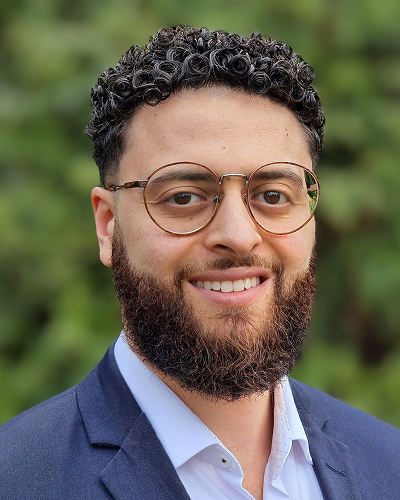
Steven is a Project Manager and Clinical Research Coordinator at Princess Margaret Cancer Centre, with academic training in Psychology and Kinesiology.
His work focuses on supporting prostate cancer patients in managing sexual health challenges related to treatment. He brings a strong interest in the mind-body connection to his clinical and research efforts, particularly within survivorship and rehabilitation care.
Outside of work, Steven enjoys spending time with family, staying active, and brings the same passion to the basketball court as he does to his research.

Dr. Ryan Flannigan is an Associate Professor, and surgeon-scientist within the Department of Urologic Sciences at the University of British Columbia.
He is the Director of the Urologic Supportive Care Program, Director of the Reproductive & Sexual Medicine Centre within the M.H. Mohseni Institute of Urologic Sciences, and Director of the Male Infertility, Sexual Medicine, and Microsurgery Fellowship Program. His practice is subspecialized in Sexual and Reproductive Medicine, and his research program is focused on developing translational technologies and engineering solutions to advance therapeutics in both sexual medicine and infertility.
He has received national and international awards including the American Urologic Society Rising Star Award, American Society of Andrology Matthew Hardy Young Andrologist Award and has been funded by the Canadian Institute of Health Research, Canadian Foundation for Innovation, Michael Smith Foundation for Health Research, Canadian Urologic Association Scholarship Foundation, American Urology Association, American Society for Reproductive Medicine and the Sexual Medicine Society of North America.

Dr. Matthew is a Health and Clinical Psychologist as well as a Clinician-Investigator in the Department of Surgery, Division of Urology, and an Associate Professor in both the Departments of Surgery and Psychiatry at the University of Toronto.
He serves as the Lead Psychologist, Director of the Sexual Health Program, Director of Psychology Training, and Head of the GU Survivorship Program at Princess Margaret Cancer Centre in Toronto, Canada. Dr. Matthew has been instrumental in shaping national and international guidelines for sexual healthcare in cancer (ASCO/CCO, Movember).
His clinical care and research are centered on urologic cancers, focusing on prevention, sexual health, survivorship, and improving patient quality of life.